Yoga is one of the most widely practiced disciplines in the world today. Millions of people attend yoga classes, watch yoga videos online, or follow yoga routines on social media. Yet, despite its popularity, there is still a great deal of confusion about what yoga actually is.
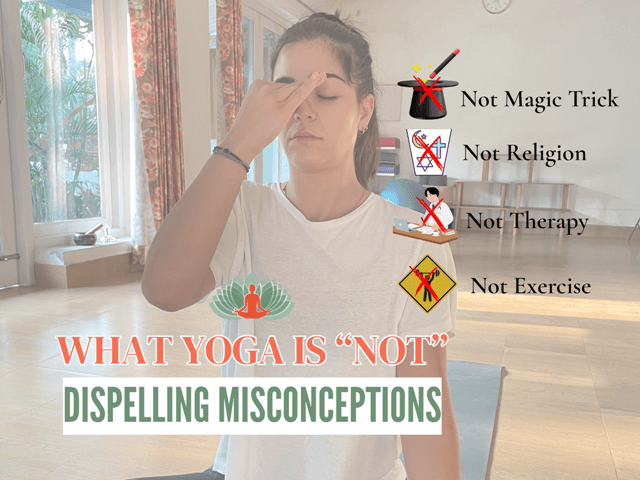
One of the most effective ways to understand yoga is by first clarifying what yoga is not. By removing common misconceptions, we create space for a deeper and more authentic understanding of this ancient discipline.
Yoga Is Not Magic or Supernatural Power
Sometimes yoga is portrayed as something mysterious or supernatural. Stories circulate about yogis performing extraordinary feats or possessing magical abilities. While such narratives may sound fascinating, they distract from the real purpose of yoga.
Yoga is not about developing magical powers or impressing others with extraordinary abilities. Its real aim is much simpler and far more meaningful: to cultivate awareness, balance, and clarity in our everyday life.
True yogic progress is not measured by extraordinary tricks but by the quiet transformation of the mind – greater calmness, stability, and understanding.
Yoga Is Not a Religion or Dogma
Another common misunderstanding is that yoga belongs to a particular religion or belief system. In reality, yoga does not demand that a person adopt a specific faith, doctrine, or ideology.
Yoga is not a religion, a cult, or a system of dogmatic belief. People from many cultures and backgrounds practice yoga while maintaining their own spiritual or religious traditions. What yoga offers is a practical method for understanding the body, breath, and mind through direct experience.
Because of this experiential nature, yoga remains accessible to anyone who wishes to explore self-awareness.
Yoga Is Not a Cure for Every Disease
In modern wellness culture, yoga is sometimes promoted as a universal therapy capable of curing every illness. While yoga can certainly support health, reduce stress, and improve overall well-being, it should not be misunderstood as a miracle cure.
Yoga is not a substitute for medical treatment, nor is it a magical solution for all diseases. Instead, it is a discipline that helps create conditions for better physical and mental balance. By improving posture, breathing, relaxation, and awareness, yoga supports the body’s natural capacity for stability and recovery.
Understanding this distinction keeps our expectations realistic and respectful toward both yoga and modern medicine.
Yoga Is Not Self-Torture or Extreme Mental Concentration
Historically, some people have associated spiritual practices with extreme austerities or harsh forms of self-denial. Yoga, however, does not encourage self-punishment or unnecessary hardship.
Yoga is not about forcing the body into painful positions or pushing the mind into rigid concentration. In fact, authentic yogic practice emphasizes balance, patience, and gradual refinement. The body is treated with respect, and the mind is trained gently through awareness rather than aggression.
This balanced approach allows yoga to remain sustainable and beneficial for long-term practice.
Yoga Is Not Just Exercise
Perhaps the most common misconception today is that yoga is simply a form of physical exercise. Many modern classes focus primarily on stretching, flexibility, or fitness.
While physical postures (āsana) are an important part of yoga practice, they represent only one aspect of a much broader system. Yoga also includes breathing practices, relaxation techniques, meditation, and philosophical inquiry. Together, these elements help develop a deeper connection between body, breath, and mind.
When yoga is reduced only to exercise, its deeper purpose is easily overlooked.
Understanding Yoga Through Clarity
By recognizing what yoga is not, we begin to see its true nature more clearly. Yoga is neither magic nor dogma, neither a miracle cure nor a competitive fitness routine. Instead, it is a method for cultivating awareness and balance in everyday life.
This clarity helps practitioners approach yoga with the right attitude-free from unrealistic expectations and open to genuine learning.
Experience Yoga Beyond the Misconceptions
If you are curious to explore yoga beyond the stereotypes and misunderstandings, the best way is through guided practice and thoughtful study.
Come experience yoga in the countryside of India, where tradition meets personal care. Choose from our 200-Hour Hatha Yoga Teacher Training, our 80-Hour Yoga Foundation Course, our Yoga Vacations, or contact us to create your own Tailor-Made Program.
Yoga begins not with belief, but with experience and awareness.