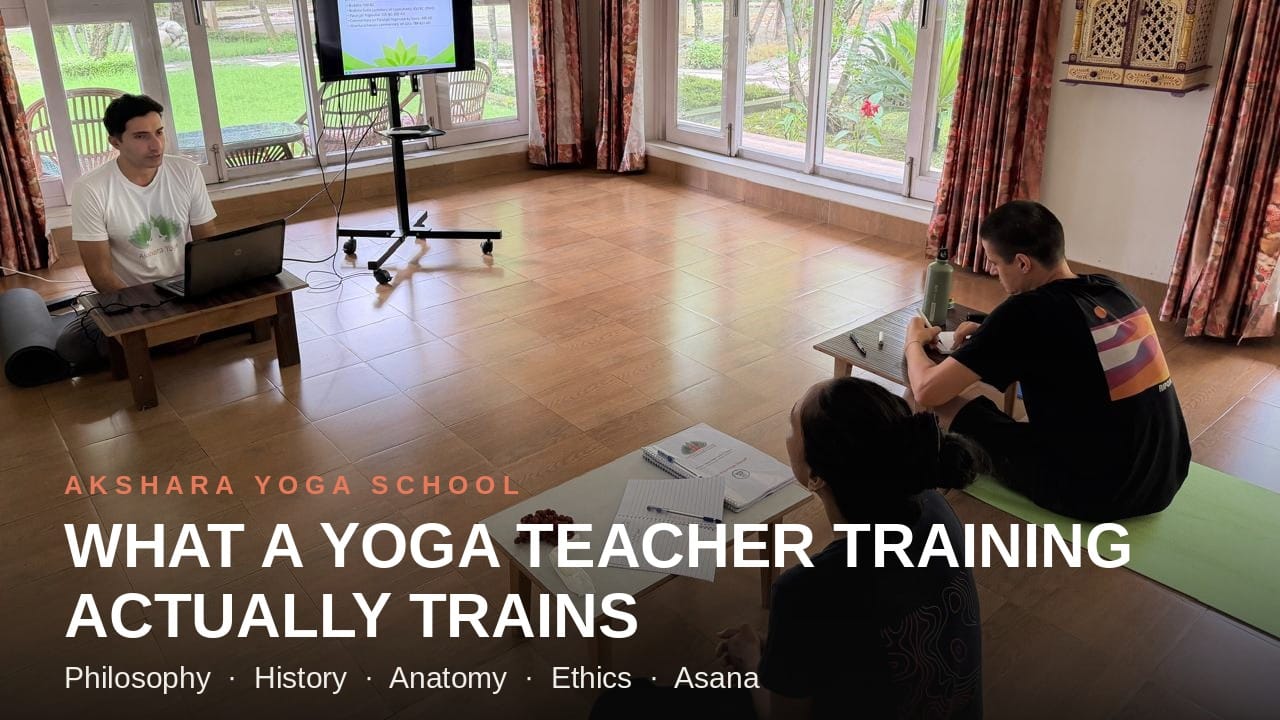
A 200-hour Yoga Teacher Training is built to make you better at yoga. Asana practice is a large and important part of that. But it is one part, not the whole.
This one idea causes more confusion for new students than anything else. So let’s slow down and explain it clearly.
What people expect when they arrive
Many students arrive at our Hatha Yoga Teacher Training Course expecting something close to an intense yoga retreat: a lot of physical practice, a lot of postures, a schedule built almost entirely around the mat. This expectation makes sense. Asana is the part of yoga people can see. It is what fills Instagram feeds and yoga magazine covers. It is also the part most beginners have direct experience with before they ever sign up for a yoga teacher training course.
So when a student sees the daily schedule for the first time and notices classroom time, anatomy lectures, philosophy lectures, and teaching practice sitting right next to the asana sessions, it can feel unexpected. Some students even wonder if they signed up for the wrong kind of program.
They didn’t. This is what a real yoga teacher training course looks like everywhere in the world, according to the same organization that sets the global standard for these programs: Yoga Alliance.
What a Yoga Teacher Training Course is actually built from
Yoga Alliance requires every 200-hour training to cover four areas of study.
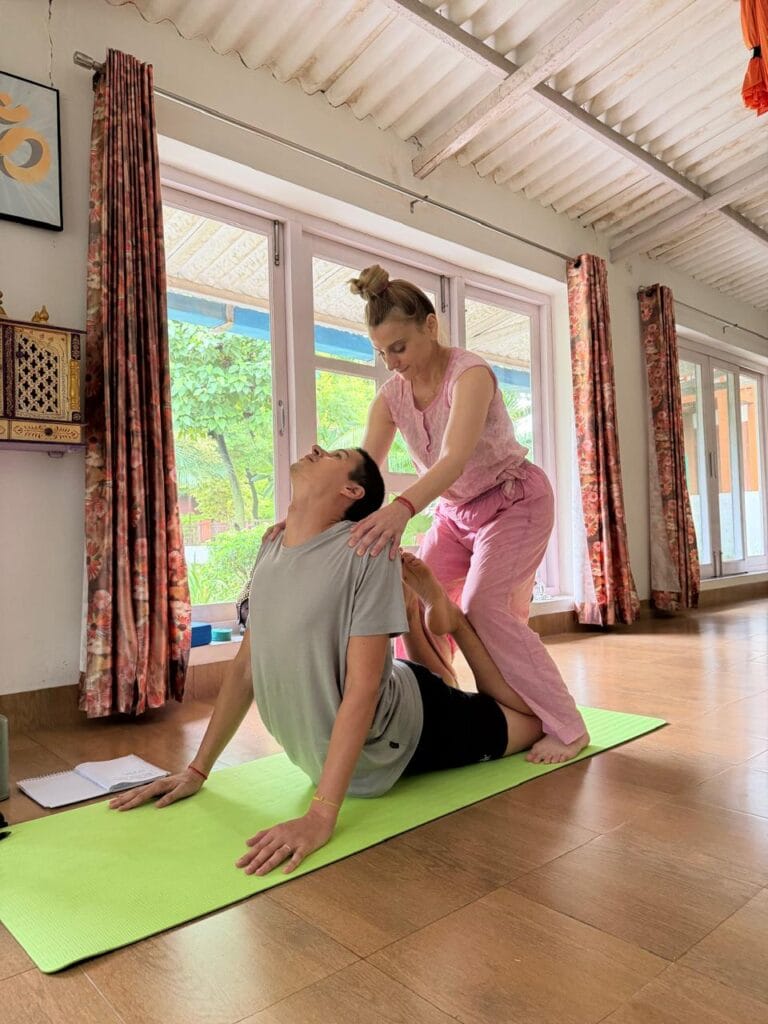
Techniques, Training and Practice: This is the biggest category, and it includes asana, but it isn’t only asana. It also covers breathing practices (pranayama), meditation, and the technical skill of practicing these things correctly and safely including how to give an adjustment. A good adjustment takes real skill to know where to touch, how much pressure to use, and when to leave a posture alone. Teachers sometimes call this “the art of touch.” It is what lets a teacher help a student go deeper into a posture safely instead of pushing them toward an injury.
Anatomy and Physiology: This is where you learn how the body actually works: bones, muscles, joints, breath, and the nervous system. This category also covers biomechanics: how the body moves and bears weight inside a posture. This is the knowledge behind every safe adjustment: a teacher can’t apply the art of touch well without first understanding the mechanics of the body it is being applied to.
Yoga Humanities: This covers the history of yoga, its philosophy (including the philosophy behind Hatha Yoga and Patanjali’s Yoga Sutras) its foundational texts, and the ethics of teaching it responsibly. This is where a student learns where yoga actually comes from, instead of picking up half-explained ideas from social media.
Professional Essentials: This is where a student learns how to teach: how to plan a class, how to speak to a room, how to give feedback, and how to practice teaching in front of real people before doing it for pay.
Why this design makes sense
Think about what the word “teacher” means. A yoga teacher is not only someone who can perform demanding postures well. A teacher is someone who understands the mechanics of the body well enough to prevent injury, who can explain a posture and connect it to the history and philosophy it came from, and who can lead a room of students through all of that with confidence.
You cannot build that skill set from movement alone. Asana practice, on its own, builds a strong and flexible body. It does not, by itself, build the understanding needed to guide someone else’s practice safely or to explain what yoga actually is.
Getting better at asana vs. getting better at yoga
Here is the clearest way to put it.
You get better at asana through daily physical practice. Repetition on the mat is what builds strength, flexibility, and comfort in the postures. There’s no shortcut for this, and a training gives you plenty of it.
You get better at yoga through practice combined with study. Practice builds the body’s understanding. Study builds the mind’s understanding of anatomy, of biomechanics, of history, of philosophy, of ethics, of how to teach. Yoga, as a full subject, needs both.
This is why a yoga teacher training course gives real weight to the philosophy of Hatha Yoga, Patanjali’s Yoga Sutras, the history of yoga, anatomy, yoga ethics, and correct adjustments, alongside the demanding postures. A student who only wants more asana practice can already get that from daily classes at home. A yoga teacher training course exists to build something asana classes alone don’t build: the deeper, more complete understanding that lets someone eventually stand in front of a room and teach.
What this means if you’re preparing to come to Akshara
If you’re planning to join a 200-hour hatha yoga teacher training course here, it helps to arrive with the right expectations.
Expect asana practice every day. This part of your expectations is correct. But also expect anatomy lectures, philosophy lectures on Hatha Yoga and Patanjali’s Yoga Sutras, the history of yoga, yoga ethics, hands-on training in adjustments, and time spent learning how to teach rather than only how to practice. Expect some days to feel more like a classroom than a workout.
Bring curiosity about where yoga’s ideas actually come from, not only interest in improving your handstand. If you arrive ready for both the physical and the intellectual side of the training, the schedule will make sense to you from day one instead of feeling confusing in the first week.
A yoga teacher training course gives real weight to philosophy, history, anatomy, ethics, and safe adjustments and to the demanding postures too. Someone who completes it well hasn’t just gotten better at asana. They’ve gotten better at yoga.