In our modern, fast-paced world, the mind spends most of its time swinging between two extremes: dullness (laya)-feeling lethargic, fatigued, and mentally foggy and agitation (vikṣepa)-feeling restless, anxious, and hyperactive.
To bridge the gap between action and deep rest, the ancient sage Gauḍapāda outlined a master strategy for mental management in his Māṇḍūkya Kārikā (3.44):
लये संबोधयेत् चित्तं विक्षिप्तं शमयेत् पुनः।
सकषायं विजानीयात् समप्राप्तं न चालयेत्॥
laye saṁbodhayet cittaṁ vikṣiptaṁ śamayet punaḥ |
sakaṣāyaṁ vijānīyāt samaprāptaṁ na cālayet ||
Translation: When the mind falls into dullness or oblivion, awaken it; when it becomes agitated, pacify it. In between, recognize subtle attachments and underlying distractions; once perfect equilibrium is reached, do not disturb it again.
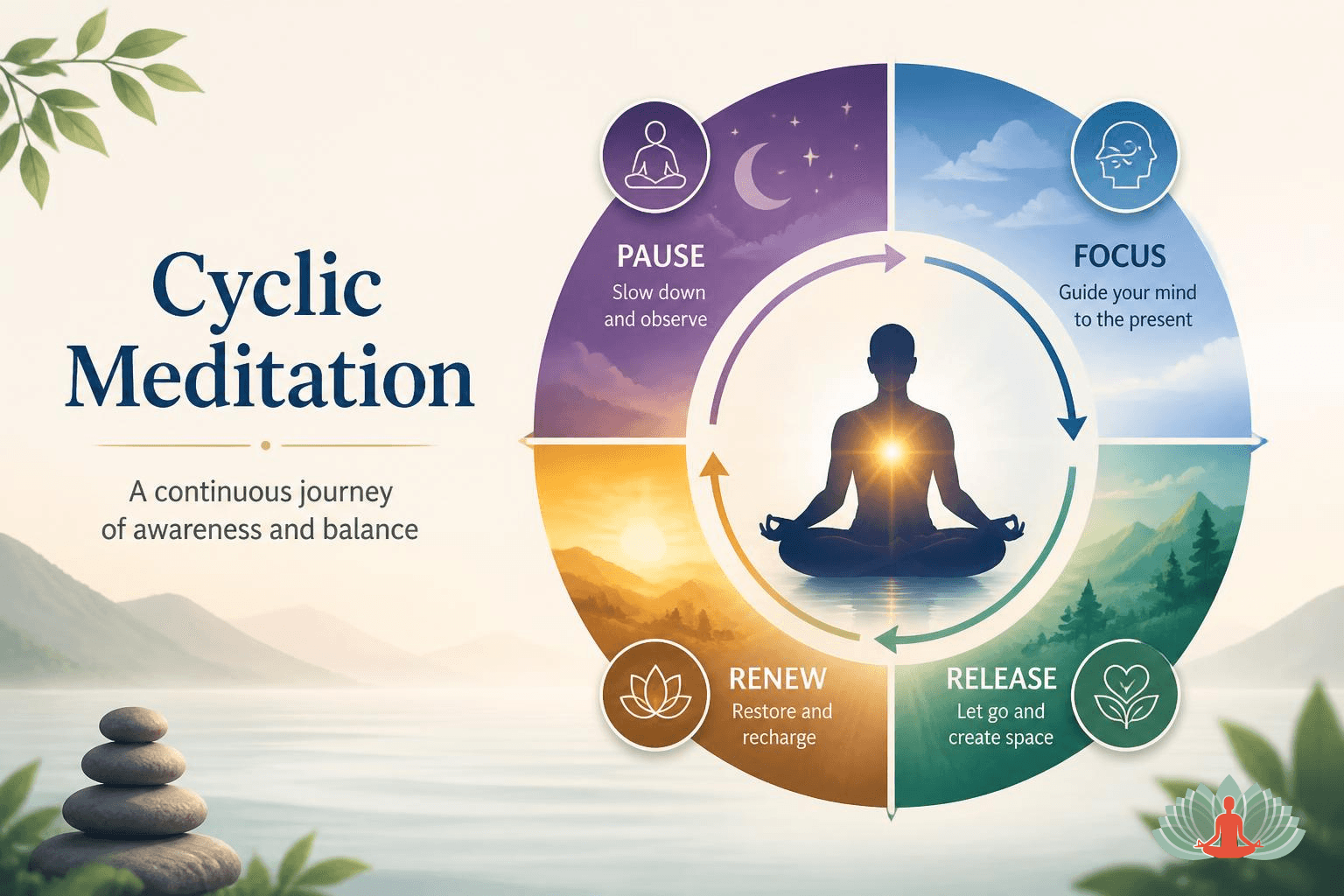
This foundational verse serves as the core principle behind Cyclic Meditation. A powerful dynamic practice that alternates between movement and stillness, stimulation and relaxation, to lead the practitioner into profound mental clarity.
Understanding the Four States of Mind in Meditation
To navigate the mind effectively during practice, Gauḍapāda identifies four distinct psychological states that arise:
1. Laya (Dullness & Oblivion)
When we sit down to relax or meditate, the mind often drops into laya – sluggishness, drowsiness, or passive daydreaming.
- The Yogic Strategy: Laye saṁbodhayet – Awaken and stimulate the mind gently using slow, conscious physical movement (āsanas) or dynamic breathing (prāṇāyāma) to break through lethargy.
2. Vikṣepa (Agitation & Distraction)
Once stimulated out of dullness, the mind frequently overcorrects, becoming restless or distracted by external thoughts and worries.
- The Yogic Strategy: Vikṣiptaṁ śamayet – Pacify and calm the mind through guided relaxation, gentle breath awareness, and grounding posture work.
3. Sakaṣāya (Subtle Stagnations & Internal Resistance)
Between agitation and total stillness lies kaṣāya, the hidden layers of subconscious impressions (saṁskāras), suppressed emotions, and mental attachments that surface when outer distractions quiet down.
- The Yogic Strategy: Sakaṣāyaṁ vijānīyāt – Recognize these subtle distractions with non-judgmental awareness without reacting to them or getting swept away.
4. Sama (Perfect Equilibrium & Stillness)
When dullness is awakened, agitation is calmed, and subtle resistance is observed without reaction, the mind enters sama—a state of profound balance, poise, and unshakeable inner peace.
- The Yogic Strategy: Samaprāptaṁ na cālayet – Once equilibrium is reached, do not disturb it. Stop applying effort, stop manipulating the breath, and simply abide in pure awareness.
How Cyclic Meditation Works in Practice
Cyclic Meditation applies this ancient verse through a structured loop of stretch and relaxation:
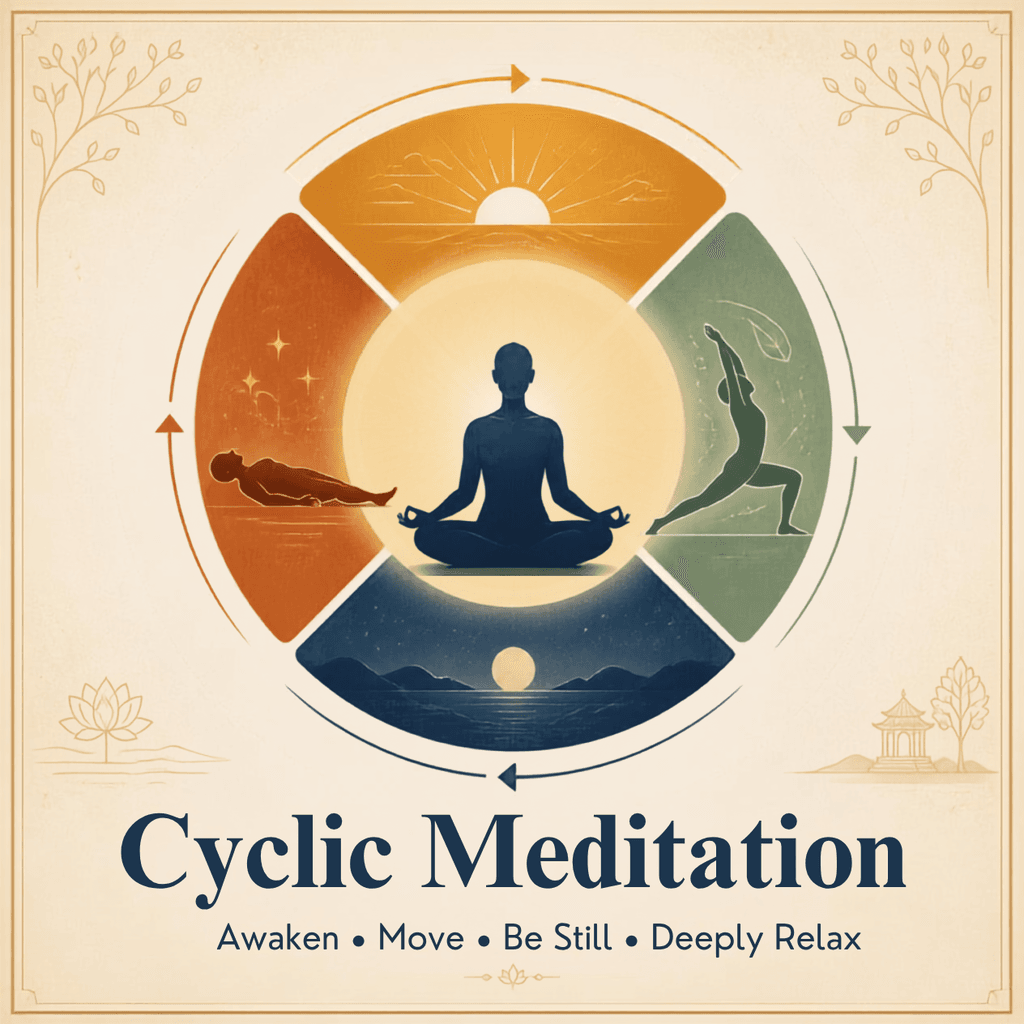
Alternate Stimulation and Rest: Slow, mindful standing and sitting postures (like Tāḍāsana or Ardhakaticakrāsana) systematically activate the nervous system to lift laya.
Deep Relaxation Periods: Following movement with periodized resting postures (like Śavāsana) activates the parasympathetic nervous system, soothing vikṣepa.
Restoring the Nervous System: Cycling through movement and stillness releases deep-seated stress trapped in both the physical body and the subtle mind.
The Takeaway for Your Daily Practice
Whether on the yoga mat or in daily life, Gauḍapāda’s formula gives us a clear roadmap for self-mastery:
- Feeling sluggish or stuck? Introduce conscious effort, movement, or energizing breath.
- Feeling overwhelmed or anxious? Turn inward, slow down, and ground yourself in stillness.
- Reached a place of inner peace? Let go of control and simply enjoy the stillness.